Nissan Brake Repair Services in Baytown, TX
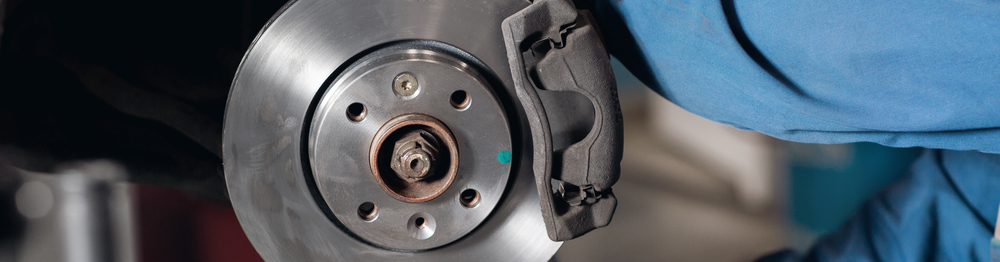
Smooth, Quiet, Predictable: Bring Your Brakes Back to Form
Your foot is the first instrument a brake technician wants to hear about, because the way the pedal feels says a great deal about where a problem lives. A pedal that sinks, one that suddenly takes a shove, one that rides low or one that throbs under your shoe each points toward a different part of the system. The brake team at Bravo Nissan in Baytown, TX starts every visit by reproducing that feel and tracing it to its source, on all makes and models. Pads and rotors are only one possibility on that list, next to the booster, the master cylinder, the anti-lock unit and the parking brake. You hear what the pedal was telling you before any part is quoted.
Brake Basics Every Driver Can Use
The brake pedal is the far end of a chain of parts, and each link shapes what your foot feels. Behind the firewall a round booster multiplies your effort, a master cylinder turns that push into hydraulic pressure, and lines carry the pressure out to each wheel. Because every link leaves its own signature, an experienced technician can often narrow a complaint to one link from the feel alone.
On many gasoline engines the booster draws on engine vacuum through a hose and a one-way check valve. Inside the booster, a rubber diaphragm separates a vacuum chamber from outside air, and pressing the pedal lets that air push on the diaphragm to add force. Once the vacuum is lost the brakes still work, but the driver has to supply all of the effort, so the pedal turns stiff and the car takes far more push to slow.
- The check valve where the vacuum hose meets the booster holds a small reserve, so a healthy system still gives a few assisted stops after the engine is switched off.
- The master cylinder feeds two separate hydraulic circuits, so a leak on one side leaves the other working while the pedal travels noticeably farther.
- The anti-lock module can hold, release and reapply pressure at one wheel many times a second, and that cycling is the clatter you feel through the pedal in a panic stop.
- Stability control borrows the same module to brake a single wheel on its own, so one bad wheel sensor can take both features offline together.
- The parking brake, whether it is a lever, a small foot pedal or a button that drives motors at the rear calipers, has its own cables or actuators that wear apart from the main brakes.
Lamps in the cluster add a second voice to what your foot reports. An ABS or slip indicator that stays on means the module has logged a fault and stepped back, though ordinary braking normally keeps working. When the main brake lamp glows with the parking brake fully released, low fluid is the usual reason, and that deserves attention the same day. Stored codes are pulled before a part is touched, since a code names the circuit that failed.
A firm pedal is easy to take as good news, and a stiff one can even feel safer. In truth, a pedal that suddenly demands a hard push usually means the booster has lost its assist, and stopping distances grow even though nothing feels loose. Thick pads say nothing about the help behind them, so a worn pad and a missing assist can feel alike to the driver while needing entirely different repairs.
What Changes as Brake Wear Builds Up
Each pedal feel has its own short list of causes. Describing yours in a few plain words, such as soft, low, hard, grabby or pulsing, gives the technician a head start before the car ever leaves the lot.
Timing matters as much as the feel itself. A stiff pedal on only the first stop after the car has sat overnight points somewhere different from one that stays stiff all day, and a pulse felt only on the long slope down off a bridge tells a different story than one felt while crawling through a parking lot.
- A pedal that takes a hard shove and stops the car slowly, sometimes with a faint hiss from under the dash as you press.
- A pedal that sits lower than it used to and travels most of the way down before the brakes bite.
- A pedal that grabs abruptly at the very top of its travel, which can mean a booster valve sticking or a caliper that is slow to let go.
- A rapid throb through the sole of your shoe on dry pavement at normal pressure, when the anti-lock system has no reason to step in.
- A parking brake lever or button that needs more travel to hold, or a car that creeps on a slope with the parking brake set.
Some pedal complaints start outside the brakes entirely. A worn engine mount can let the vacuum hose pull loose, an engine idling roughly can starve the booster of vacuum, and a floor mat bunched under the pedal can make it feel short. Those are ruled out on the way to the hydraulic parts.
A change in pedal feel is worth a visit before it becomes a repair bill. If the pedal goes to the floor or the brake lamp lights with the fluid low, park the car and arrange a tow. Anything milder can usually be driven gently to an appointment with extra room left to the car ahead.
How Bravo Nissan Cares for Your Brakes
Start with whichever service matches what your foot has been noticing, since all three follow the pedal.
Pedal Feel Road Test and Booster Check
The technician drives the car with your description in mind, pressing the pedal lightly, firmly and repeatedly to match the feel you reported. With the engine off, the pedal is pumped until the reserve is gone and then held while the engine starts, and a healthy booster lets the pedal ease down slightly under the foot. A vacuum gauge on the supply hose and a look at the check valve show whether the booster is getting what it needs. You learn whether the problem lives in the assist, the hydraulics or the parts at the wheels.
ABS and Stability Lamp Diagnosis
A scan tool reads the stored anti-lock and stability codes, then shows live wheel speed from every corner while the car rolls. A sensor that drops out, reads low or flickers is traced along its wiring to the connector and the toothed ring it reads. The anti-lock module can also be commanded through a self test so its valves and pump can be heard working. Repairs are quoted only for the sensor, wire or module the data points to.
Parking Brake Adjustment and Cable Service
Parking brakes get little use on flat driveways, and their cables can seize or stretch while they sit idle. On designs with small drum shoes inside the rear rotor, the shoes are cleaned, adjusted and checked for wear, and the cables are loosened, lubricated and set to the correct travel. Where the parking brake is set by a button, the motors at the rear calipers are retracted through diagnostic software first and never forced back by hand. The finished brake is checked for a firm hold and a clean release so nothing drags on the road.
How Baytown Drivers Approve Each Step
The visit opens with a few questions about the pedal: when it changed, whether it feels different on the first stop of the day, and whether a dash lamp came on with it. The technician then feels the pedal in the bay with the engine off and again with it running, since the difference between the two says a lot about the booster.
Consider a commuter who crosses the Fred Hartman Bridge on State Highway 146 every morning and notices the pedal needs a real shove to hold speed on the far slope toward La Porte. A friend insists the pads must be worn to the metal, and new pads get booked. The pads turn out to be thick and even, while the booster check shows weak vacuum because a cracked hose elbow at the check valve is drawing in air and hissing faintly with each press. A new hose and valve restore the assist, and the original pads stay on the car.
- The pedal is felt with the engine off and running, and its height and reserve are compared with what the vehicle should give.
- Booster vacuum, the check valve and the supply hose are tested before any hydraulic part is suspected.
- Stored codes and live wheel sensor data are read whenever a dash lamp is part of the complaint.
- You see each finding with its reason on a written estimate, and the tools stay down until you sign off.
After a repair, the pedal is checked again from a cold start and after a drive to confirm the feel is back where it belongs. The lines are bled whenever the hydraulics were opened, codes are cleared and rechecked on a road test, and the parking brake is set and released to prove it holds and lets go cleanly.
A work van with a stiff pedal can share the morning with a compact sedan whose ABS lamp keeps blinking. When the schedule and parts allow, swapping a booster hose or wheel sensor often wraps up the same day, though a booster or anti-lock module sometimes has to come from a supplier, and you hear that while the car is still in one piece. The department takes all makes and models, so either vehicle gets the same pedal-first diagnosis.
Brake Service From Bravo Nissan Near Baytown
Nissan models carry their own brake details, and the technicians at Bravo Nissan are factory trained to work through them. On an equipped Rogue or Altima with a button-set parking brake, Nissan diagnostic tools retract the rear actuators before pads come off, and the same tools read the anti-lock and stability data the vehicle has stored. Your VIN pulls up the exact pad compound, rotor and fluid listed for that build.
Nissan Intelligent Emergency Braking and similar driver aids lean on the same brake hardware, so the technician confirms no related messages remain after brake work. Your advisor can explain which of those systems your model carries.
- Owners after the original pedal feel can ask for genuine Nissan pads, rotors and booster parts.
- Nissan service bulletins about pedal feel or warning lamps are looked up for your vehicle before parts are recommended.
- Brake findings are saved to your service history, giving the next visit a pedal and pad baseline to compare against.
Find Bravo Nissan in Baytown, TX
Our Brake Repair Reach Beyond Baytown
Drivers who cross the Fred Hartman Bridge on State Highway 146, or who start and stop along the corridor toward Mont Belvieu, feel their brakes through the pedal on every trip. Baytown owners and their neighbors bring that feel to Bravo Nissan so a change gets traced while it is still small.
- La Porte, TX
- Deer Park, TX
- Pasadena, TX
- Seabrook, TX
- Channelview, TX
- Mont Belvieu, TX
- Highlands, TX
- Cove, TX
A pedal that feels different from last month is reason enough to stop in.
Brake Care Questions We Hear Often
Pedal feel and dash lamps drive most of the brake questions owners bring to the service desk, and the common ones are answered below.
Q: Why does my brake pedal feel hard to push all of a sudden?
Q: Is a low brake pedal the same thing as a spongy one?
Q: Can I keep driving while the ABS lamp stays lit?
Q: Why does the car roll a little with the parking brake set?
Q: Does the pedal and booster testing apply to other brands too?
Describe the pedal in your own words when you reach the service desk, and say whether a lamp came on with it.
Those two details shape the road test.
Schedule Your Brake Repair at Bravo Nissan
A brake pedal changes slowly enough that drivers adapt to it without noticing. Booking when you first catch yourself pressing harder or deeper keeps a cracked hose or a tired seal from growing into a longer list of parts.
Each finding comes with an explanation and a written estimate, and you choose what is repaired today and what can be planned. Parts that test healthy are left alone.
A description of how the pedal feels and when it changed lets the Bravo Nissan service team plan the visit around it. If the pedal is sinking or the brake lamp is on, mention it first so the car is seen promptly.
Service Specials

Full Synthetic
Synthetic oil just works better. Synthetic oil lubricates better at extreme temperatures and performs better for longer. Upgrading from conventional to syntheti
Read More

Discounted Rental Rate
Take advantage of a discounted rental vehicle rate of just $35 per day while your vehicle is being serviced with us.

Ultimate Brake Package
Includes : Front and rear brake pads, front and rear rotors, brake system flush, lube calipers and pins, and check brake operation.

Tire Rotation
Rotating your tires regularly extends the life of your tires, makes your vehicle drive and ride better, and helps us catch problems before they cause safety iss
Read More
Tire Rotation
Regularly rotating and balancing your tires can improve vehicle handling, tire wear, fuel economy. It may also be required by the tire manufacturer to keep the
Read More
Engine Air Filter
Your vehicle needs air to perform. Replacing your air filter at regular intervals increases fuel efficiency while improving acceleration. | Service Includes: Re
Read More
Cabin Air Filter
Breathe fresh, clean air with a replacement cabin air filter. We suggest replacing your cabin air filter every 6 to 12 months. | Includes: OEM cabin air filter
Read More
4-Wheel Alignment

Wheel Alignment
Your vehicle handles better, gets better gas mileage, and your tires last longer when your wheels are properly aligned. | Service Includes: Offer Valid with pur
Read More
Coolant Flush

Transmission Service
Service Includes: Removal of old transmission fluid, Fresh new transmission fluid added, Cleaning the pan and housing, Inspecting for leaks
30k Mile Service
60k Mile Maintenance

Military Discount
For those who serve our country, thank you! | Save up to $100, Discount on any regularly-priced service for current or former military personnel

Senior Discount
Allow us to show our appreciation with a discount. | Save up to $100, Parts and service discount for seniors
