Nissan AC Repair Services in Baytown, TX
Something Off With Your Air Conditioning? Act Early
Automatic climate control is a small computer that listens to sensors and then decides how hard the compressor should work and where the air should go. When that decision-making goes wrong, the cabin can swing from icy to stuffy even though the refrigerant loop itself is sound. At Bravo Nissan in Baytown, TX, the technicians who handle all makes and models start with diagnosis, reading what each sensor reports and watching how the controls respond. Only after the signals make sense do they move on to hardware such as the compressor clutch or a pressure switch. That order keeps a good compressor from being swapped for a fault that lives in a sensor.
Behind the Scenes of Your Air Conditioning
Every automatic system runs a loop of measure, compare and adjust. Sensors report the temperature inside the car, the temperature outside, the strength of sunlight on the dash and the coldness of the evaporator core, and a control module weighs those readings against the number you set on the panel. It then commands the compressor, the blower speed and a set of small motorized doors to close the gap.
The evaporator sensor guards against a problem most drivers never see. If the core gets too cold, the condensation on its fins turns to frost, so the module uses this reading to cycle the compressor clutch off, or on many newer compressors to shorten its stroke, before ice can form. A sensor that drifts or fails can let the core freeze solid while the controls believe everything is normal.
- A sunlight sensor, usually a small dome on top of the dashboard near the windshield, tells the module to add cooling when the sun hits the cabin, so a dash mat or parking pass laid over it can skew automatic mode.
- The interior sensor often sits behind a little grille near the steering column or the panel, and a tiny fan or tube draws cabin air across it, so lint collecting there can make it misjudge the real cabin.
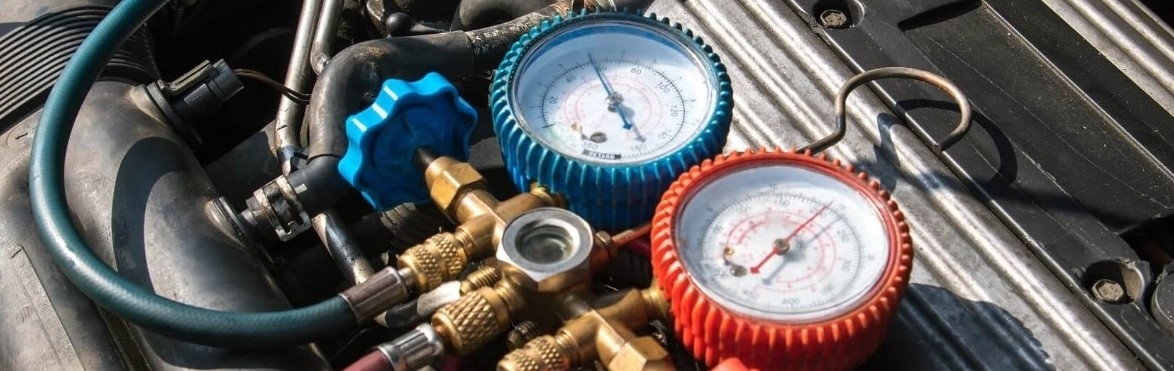
- A refrigerant pressure reading, from a switch on older designs or a transducer on newer ones, works like a permission slip, and a reading of a nearly empty or overfilled loop keeps the compressor from engaging at all.
- Recirculation reuses cabin air that has already been cooled once, while outside-air mode keeps pulling in fresh air that has to be cooled from scratch.
- Dual-zone systems give each front seat its own temperature door, and a module that sees one side set at its coldest extreme may run the compressor and blower harder for the whole car.
Habits at the panel shape how well the controls perform. Leaving recirculation on for an entire commute cools faster at first, but stale air and fogged glass creep in over time, and many automatic systems quietly switch back to outside air for that reason. Dialing the temperature down to its coldest setting usually does not cool the cabin any sooner in auto mode, because the module already runs at full effort while the cabin is far from the target; it mainly stops the system from easing off later.
The compressor gets blamed for nearly every climate complaint, as if it were the only moving part. In an automatic system, though, the compressor only does what the module tells it, and the module only knows what its sensors report. A compressor that sits idle may be perfectly healthy and simply waiting for a signal that a failed sensor or switch never sends, so the fix can be a small part behind the dash or on a line.
Early Clues That Point Toward AC Repair
Control faults tend to produce patterns, not just warm air. The cabin may cool well around town and lose its edge on the highway, or the fan may change speed on its own while nothing about the drive has changed.
Timing is the clue technicians care about most. A system that gives up after a stretch of steady driving and recovers once the car has been parked points toward frost on the evaporator, while one that never engages at all from a cold start points toward a switch, a relay or a missing permission signal. Cooling that shifts as the sun moves across the car points toward the sunlight sensor.
- Airflow from the dash that shrinks to a whisper while the fan still sounds busy, then returns after the car has been parked, a pattern tied to an iced evaporator core.
- A clicking from the front of the engine every few seconds as the compressor clutch engages and lets go far more often than usual.
- The fan speed or vent temperature hunting up and down in auto mode while the setting stays exactly where you left it.
- Frost flakes or a fine cold mist drifting out of the dash vents partway through a long drive, a sign the core is colder than designed.
- A climate panel that shows a fault message or flashes its AC indicator, which on some vehicles is how the module reports a sensor it cannot read.
Some complaints that sound like control faults are mechanical, and the reverse is just as common. A loop that is short on refrigerant can make the compressor cycle quickly because the pressure switch keeps cutting it out, and from the driver seat that looks a lot like a sensor problem. Reading the module data next to the actual line pressures is how the technician sorts one from the other.
Driving on with a freezing evaporator is not dangerous by itself, but it is hard on the parts around it. Meltwater from a core that freezes and thaws over and over can overwhelm the drain and end up on the floor, and a compressor that runs nonstop against an iced core works harder than it was meant to. Having the controls checked once the pattern repeats keeps the fix down to a sensor or a switch.
Our AC Service Menu
The three visits below follow the signal path, from the sensors that measure the cabin to the switches that permit the compressor to run.
Climate Sensor and Module Data Review
With a scan tool connected, the technician reads what the module believes about the cabin, the outside air, the sunlight load and the evaporator core. Each reading is compared with a thermometer placed beside that sensor, so a part reporting a false number stands out. The interior sensor grille and its small aspirator fan or tube are checked for lint and blockage. You get a list of which inputs agree with reality and which do not.
Compressor Clutch Cycling and Switch Test
The technician watches how often the compressor clutch engages and releases, or on variable compressors how the control valve command changes, while the line pressures are logged. Pressure switches and the pressure transducer are tested against gauge readings to confirm they report true values. The clutch relay, its fuse and the air gap between the clutch plate and the pulley are checked as well. If the cycling pattern turns out to be normal for the conditions, you hear that plainly.
Evaporator Frost and Airflow Recovery
When cooling fades after a long run and comes back after a rest, the technician looks for frost on the evaporator by watching core temperature data and the air leaving the vents during an extended test cycle. A failed evaporator sensor is replaced and its mounting spot confirmed, since a sensor seated in the wrong place on the core can read too warm. The drain is checked so meltwater has a clear path out of the case. The system then runs through a long cycle to prove the core no longer freezes.
Approval Before Any Work on Air Conditioning
A climate control visit begins with the panel, not the gauges. The technician asks how you usually set the controls, whether auto mode is on, how often recirculation is used and how far into a drive the trouble appears, and then reproduces that exact setup before any test equipment goes on.
Say an owner commutes on I-10 toward Houston and finds that the air feels cold for the first stretch, then fades to a lukewarm trickle by the time the Garth Road exit comes up on the drive home. The compressor seems the obvious suspect, and a replacement has already been suggested. On the lift with the module data open, the evaporator sensor is reporting a core that never gets cold enough to cycle the clutch off, while a probe at the vent shows air far colder than that reading. The sensor had failed, so the compressor ran without a break, frost packed the core and choked the airflow, and the ice melted away each time the car sat. Replacing the sensor ended the fade, and the original compressor stayed in place.
- The complaint is reproduced with your usual settings, including auto mode and the recirculation choice, for long enough to see whether the fade appears.
- Module data for every climate sensor is recorded and checked against a separate thermometer reading taken at the same spot.
- Line pressures are logged during clutch cycling, so a switch fault and a refrigerant shortage are not confused with each other.
- The estimate names the failed input or switch along with the evidence behind it, and nothing moves ahead until you say yes.
Once a sensor or switch is replaced, the car runs through the same long cycle that produced the complaint the first time. The technician watches the core temperature data stay above freezing, confirms the clutch cycles at a normal pace and checks that auto mode settles at the set point without hunting.
A work pickup with a fan that hunts in auto mode and a compact hatchback whose air fades on the highway can sit in neighboring bays, since the team works on all makes and models. When the schedule and parts allow, a sensor swap is often wrapped up that same day. A part buried inside the dash takes longer, and the advisor tells you which case applies at the start.
How Bravo Nissan Handles AC Repair Near Baytown
Nissan technicians at Bravo Nissan train on the way Nissan automatic climate systems read their sensors and command the compressor. On a Rogue or a Pathfinder with automatic dual-zone control, Nissan diagnostic software shows each sensor value and lets the technician command the doors and the blower one at a time, separating an input fault from a mechanical one.
Sensor part numbers and mounting details are confirmed with your VIN, since the evaporator sensor and its clip can differ between builds of the same model. Nissan service information also lists any calibration the door motors may need after a repair, and the technician completes it before the car is returned.
- Genuine Nissan climate sensors and pressure switches can be ordered for owners who want factory parts.
- If Nissan has published a service bulletin about a climate sensor on your model, the technician reads it first.
- Readings recorded during the visit stay in your Nissan service history for later comparison.
Find Bravo Nissan in Baytown, TX
Towns We See for AC Repair
Highway commuters on I-10 and drivers making short hops along the Garth Road shopping corridor ask very different things of a climate system, and each routine exposes its own kind of control fault. Long steady runs are where a frozen evaporator shows itself, while stop-and-start errands reveal clutch and switch problems, so drivers from Baytown and the towns around it bring both kinds of complaint to Bravo Nissan.
- Mont Belvieu, TX
- Highlands, TX
- La Porte, TX
- Channelview, TX
- Crosby, TX
- Cove, TX
- Deer Park, TX
- Old River-Winfree, TX
A climate system that keeps changing its mind deserves a look at its signals first. Bring the pattern in, and the technician will trace it to the part that is misreporting.
What People Ask Our Service Advisors About AC Repair
These are the climate control questions drivers ask most when their system starts behaving oddly.
Q: Can a dash mat or a phone mount affect my automatic climate control?
Q: What does the AUTO button actually do on my climate panel?
Q: Why does my fan get louder on its own while I am driving?
Q: Why does one side of my dual-zone system feel different when both sides are set the same?
Q: Can your technicians diagnose climate controls on a make other than Nissan?
Note which settings were on and how far into the drive the trouble started, then share that when you book so the test can copy it.
A photo of the climate panel at the moment it acts up is useful as well.
Book AC Repair at Bravo Nissan
A climate complaint is easiest to diagnose while it still follows a clear pattern you can describe. Bringing the car in while the fade shows up on every highway run gives the technician a repeatable test and a faster answer.
The readings and the estimate are shared with you before anything is ordered, and each item is priced on its own line. You choose what gets done now and what can wait.
Tell the Bravo Nissan service team which settings you use and when the trouble starts, and the visit can be planned around a long enough test. If the air quits completely on the way in, mention that at drop-off as well.
Service Specials

Full Synthetic
Synthetic oil just works better. Synthetic oil lubricates better at extreme temperatures and performs better for longer. Upgrading from conventional to syntheti
Read More

Discounted Rental Rate
Take advantage of a discounted rental vehicle rate of just $35 per day while your vehicle is being serviced with us.
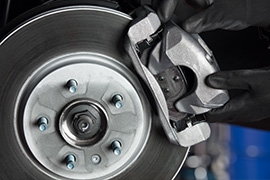
Ultimate Brake Package
Includes : Front and rear brake pads, front and rear rotors, brake system flush, lube calipers and pins, and check brake operation.

Tire Rotation
Rotating your tires regularly extends the life of your tires, makes your vehicle drive and ride better, and helps us catch problems before they cause safety iss
Read More
Tire Rotation
Regularly rotating and balancing your tires can improve vehicle handling, tire wear, fuel economy. It may also be required by the tire manufacturer to keep the
Read More
Engine Air Filter
Your vehicle needs air to perform. Replacing your air filter at regular intervals increases fuel efficiency while improving acceleration. | Service Includes: Re
Read More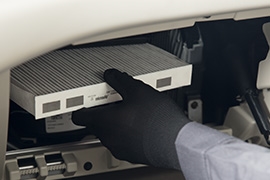
Cabin Air Filter
Breathe fresh, clean air with a replacement cabin air filter. We suggest replacing your cabin air filter every 6 to 12 months. | Includes: OEM cabin air filter
Read More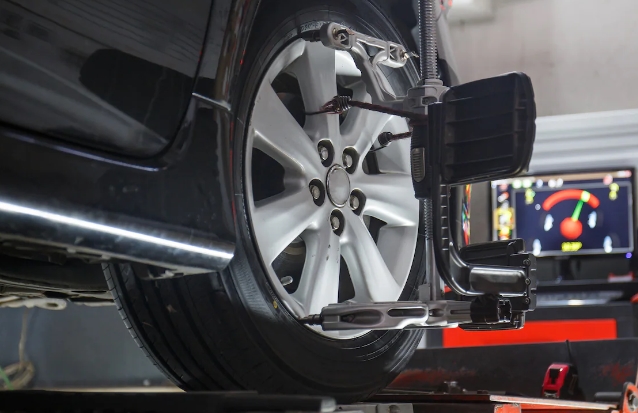
4-Wheel Alignment

Wheel Alignment
Your vehicle handles better, gets better gas mileage, and your tires last longer when your wheels are properly aligned. | Service Includes: Offer Valid with pur
Read More
Coolant Flush

Transmission Service
Service Includes: Removal of old transmission fluid, Fresh new transmission fluid added, Cleaning the pan and housing, Inspecting for leaks

30k Mile Service

60k Mile Maintenance

Military Discount
For those who serve our country, thank you! | Save up to $100, Discount on any regularly-priced service for current or former military personnel
Senior Discount
Allow us to show our appreciation with a discount. | Save up to $100, Parts and service discount for seniors